Crafting the Kora
The Kora is a magnificent 21-string instrument, frequently classified as a double-bridge-harp-lute, predominantly found in West Africa. Specifically, it holds deep cultural roots in countries such as Gambia, Senegal, and Mali. For centuries, this acoustic marvel has served as the chosen vessel of the Griot—a hereditary class of traveling poets, musicians, and storytellers who maintain a tradition of oral history.
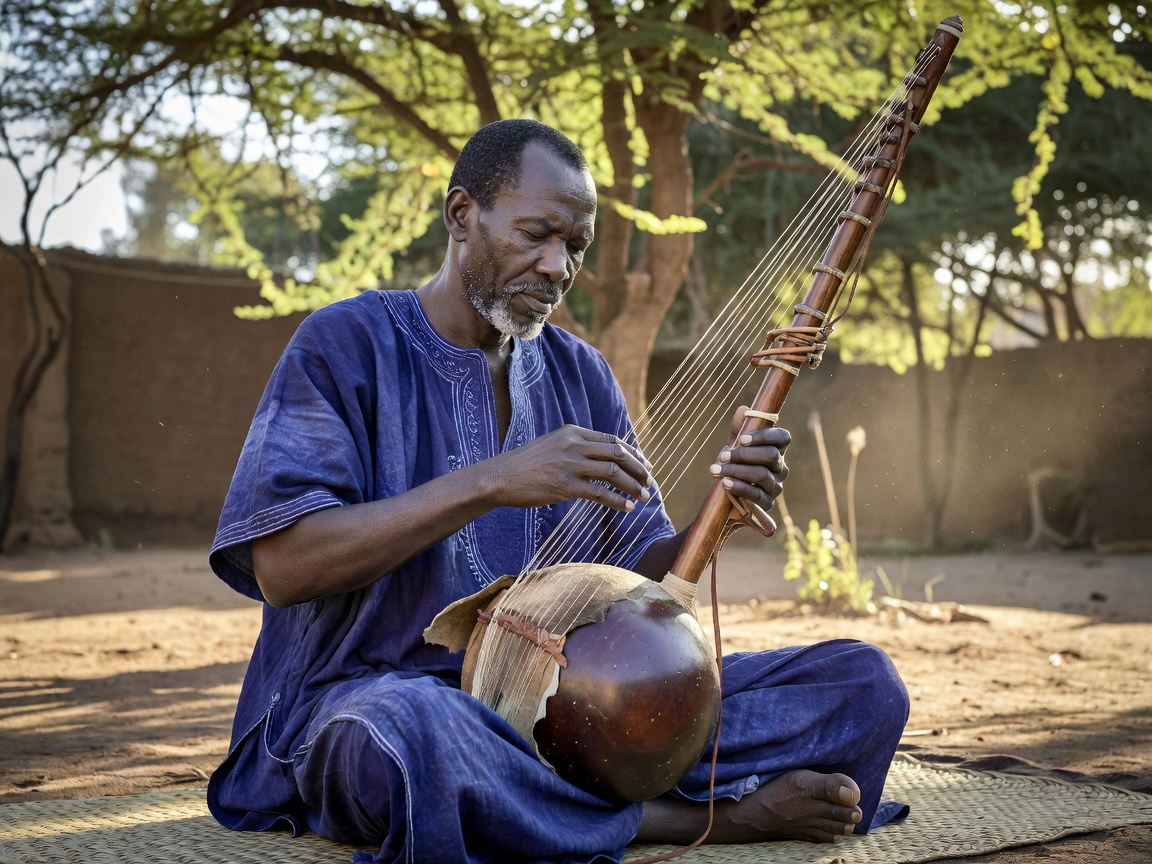
The Anatomy of the Kora
Constructing a Kora is a reverent act of woodworking and organic engineering. The body is formed from a large calabash gourd, cut in half and hollowed out. This gourd acts as the resonator, amplifying the delicate plucks of the strings. It is stretched tight with cowhide to create a vibrant soundboard, secured with traditional brass tacks or intricate lacing.
"The music of the kora is a river that carries the history of generations, flowing seamlessly from the hands of the Griot."
A long hardwood neck, typically crafted from the resilient Rosewood or Mahogany found in West Africa, pieces the structure together. The 21 strings, traditionally made from thin strips of hide but today more commonly formed from nylon fishing line, are divided into two distinct ranks. The player utilizes only their thumbs and index fingers to weave intricate polyrhythmic melodies that sound akin to a harp meeting a classical guitar.
Global String Heritage
Beyond West Africa, the world of bowed and plucked strings holds other fascinating specimens, such as the Swedish Nyckelharpa.
-
►
The Nyckelharpa
Sweden -
►
The Kora
Gambia / Senegal